
Routes Opened for Installation and Maintenance
Fence Line Clearing in Saint Cloud for properties where vegetation obstructs existing or planned fence routes
A property line marked by dense brush, volunteer trees, and invasive growth prevents fence installation and makes existing fences difficult to inspect, repair, or maintain. Fence line clearing removes vegetation along the route where a fence currently stands or will be installed, creating a clean, accessible corridor that allows contractors to work efficiently and property owners to manage boundaries without fighting through palmetto, vines, or overgrown shrubs. Fritzy L.E.R LLC provides fence line clearing in Saint Cloud for residential and commercial properties where vegetation has reclaimed boundary areas, access paths, or perimeter zones.
The scope depends on what's blocking the route and what you're planning—new fence installation requires wider clearing to accommodate post-hole equipment, material delivery, and worker access, while maintenance on existing fences may need only enough clearing to expose posts and panels. Forestry mulching processes brush into ground cover that suppresses regrowth, tree removal addresses saplings and small growth that obstruct the line, stump grinding eliminates root systems where posts need to be driven, and debris removal hauls material off-site when a clean workspace is required.
Arrange an on-site review to evaluate vegetation type, fence route layout, and clearing requirements for your property.
Clearing width varies depending on fence type and installation method—chain link and wire fences need narrower corridors than privacy fencing or ranch-style board installations, and equipment access drives how much surrounding vegetation must be removed. Most fence line clearing establishes a corridor wide enough for installers to move materials, operate post drivers, and work without obstruction, typically extending a few feet on either side of the planned or existing fence line.
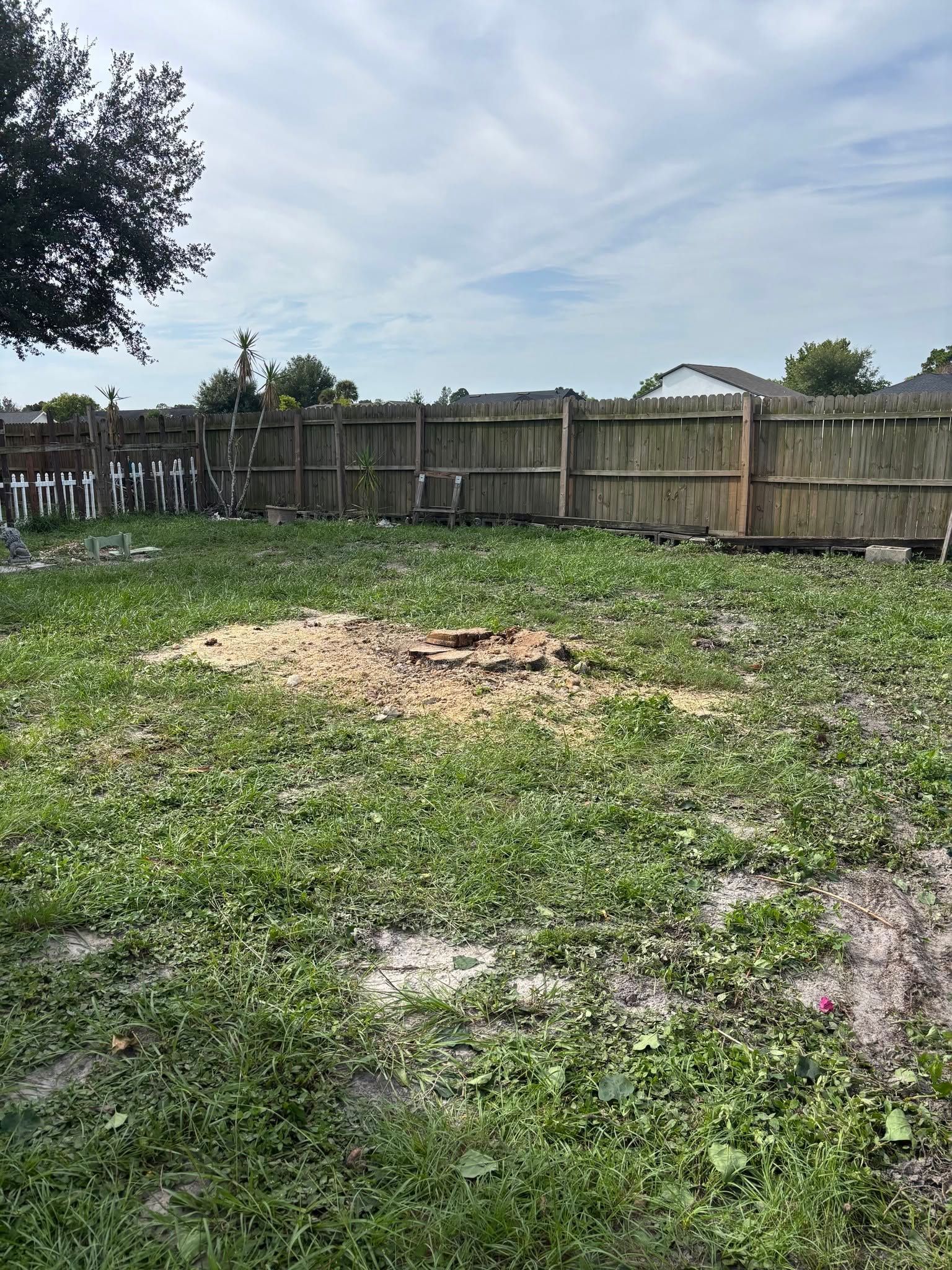
After clearing finishes, the fence route is visible from end to end, with unobstructed access for equipment and materials. Posts can be driven without hitting roots or embedded stumps, and installers work faster because they're not cutting through growth or navigating obstacles during installation. If the fence already exists, you regain the ability to inspect posts for rot or damage, repair sagging panels, and clear debris that accumulates against fencing and accelerates deterioration.
Clearing also improves long-term fence maintenance by eliminating vegetation that pushes against posts, traps moisture that rots wood, or blocks airflow that helps metal components dry after rain. Properties with livestock or security fencing benefit from clear sight lines along the perimeter, and fire breaks become more effective when dense brush no longer bridges the gap between wooded areas and structures.
Questions Before Starting Your Project
Fence line clearing projects vary based on vegetation density, fence type, and property layout, so understanding what's involved helps coordinate clearing with installation timelines.
How wide does fence line clearing need to be?
Width depends on fence type and installation method—privacy fences and post-driven installations require wider access for equipment and materials, typically six to ten feet, while wire fences and simple repairs may need only three to four feet of cleared corridor.
What vegetation types commonly obstruct fence lines in Saint Cloud?
Palmetto, Brazilian pepper, wild grape vines, and volunteer pine or oak saplings grow aggressively along property boundaries where sunlight reaches edges, and these species often require forestry mulching or mechanical removal because root systems resist hand cutting.
Does clearing include removing old fencing?
Scope depends on your project—some fence line clearing projects include dismantling and hauling deteriorated fencing before clearing vegetation, while others focus only on vegetation removal and leave old fence material for you or your installer to address separately.
When should fence line clearing happen before installation?
Clearing should finish before fencing contractors begin so installers arrive to an accessible, unobstructed workspace, which reduces installation time and prevents delays caused by vegetation that blocks equipment or prevents accurate post placement.
Can fence line clearing connect with broader brush or land clearing?
Yes—many properties combine fence line clearing with larger brush clearing or land clearing projects when boundaries are part of an overall site preparation plan, and coordinating both services reduces mobilization costs and creates consistent clearing results across the property.
Fritzy L.E.R LLC handles fence line clearing for residential and commercial properties across Saint Cloud and Central Florida, with clearing methods tailored to vegetation type, fence route conditions, and project timelines. Call (407) 973-4902 to request a quote based on your fence line and property conditions.